Obtaining quantitative information about physical phenomena involves a systematic process encompassing various techniques, tools, and methods. Here's a breakdown of the general process:
1. Defining the Phenomenon:
* Identify the phenomenon: Clearly state the physical event or process you want to study.
* Define the variables: Determine the key quantities involved and their units of measurement.
* Formulate a hypothesis: Propose a tentative explanation for the phenomenon, often based on existing theories or observations.
2. Designing the Experiment:
* Choose appropriate methods: Select techniques based on the nature of the phenomenon, desired accuracy, and available resources. This could include:
* Direct measurement: Using instruments like rulers, scales, thermometers, etc.
* Indirect measurement: Calculating quantities based on other measured values using equations or models.
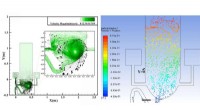
* Simulation: Creating a computer model to represent the phenomenon and generate data.
* Observation: Carefully observing the phenomenon and recording relevant data.
* Control variables: Minimize the impact of extraneous factors that could affect the results.
* Repeat measurements: Take multiple measurements to improve accuracy and reduce random errors.
* Statistical analysis: Use statistical methods to analyze the data and determine its significance.
3. Data Collection:
* Employ appropriate instrumentation: Use accurate and calibrated instruments to measure the variables.
* Record data systematically: Use clear labels, units, and a consistent format to ensure data integrity.
* Utilize data acquisition systems: Integrate electronic instruments and software for automatic data collection and processing.
4. Data Analysis and Interpretation:
* Organize and process data: Clean, filter, and format the data to prepare for analysis.
* Apply statistical methods: Use appropriate statistical tests to evaluate the significance of the data and identify trends.
* Visualize the data: Create graphs, charts, or diagrams to represent the data and reveal patterns.
* Compare results to hypothesis: Assess the validity of the hypothesis based on the analyzed data.
* Draw conclusions: Formulate logical interpretations based on the evidence and limitations of the experiment.
5. Reporting and Communication:
* Document the process: Clearly describe the experiment, methods, data analysis, and conclusions in a detailed report.
* Communicate findings: Share results through presentations, publications, or other means to contribute to the scientific community.
Examples of Quantitative Information in Different Physical Phenomena:
* Mechanics: Measuring velocity, acceleration, force, and momentum in motion.
* Thermodynamics: Determining temperature, heat transfer, and energy changes in thermal processes.
* Electromagnetism: Quantifying electric currents, magnetic fields, and electromagnetic radiation.
* Optics: Measuring light intensity, wavelength, and refractive index in optical phenomena.
* Quantum mechanics: Studying the probabilistic behavior of particles and waves at the atomic level.
Important Considerations:
* Accuracy vs. precision: Understand the difference between accuracy (closeness to the true value) and precision (reproducibility of measurements).
* Error analysis: Quantify and analyze possible sources of error in measurements and calculations.
* Ethical considerations: Ensure responsible data collection and reporting practices.
By following this comprehensive process, you can effectively obtain quantitative information about various physical phenomena, leading to deeper understanding, scientific breakthroughs, and technological advancements.