* Relativistic effects: As electrons approach the speed of light, their mass increases significantly due to Einstein's theory of special relativity. This means it requires increasingly more energy to accelerate them further.
* Energy limitations: It's practically impossible to provide the infinite amount of energy required to accelerate an electron to the speed of light.
Practical considerations:
In most real-world scenarios, electrons travel at speeds much lower than the speed of light. For example:
* Electrons in a circuit: Electrons in a typical electrical circuit move at speeds of a few millimeters per second.
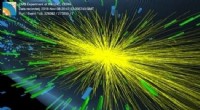
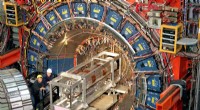
* Electrons in a particle accelerator: Even in powerful particle accelerators, electrons reach speeds close to the speed of light (e.g., 99.999999% of the speed of light), but never actually reach it.
Therefore, while the maximum theoretical velocity of electrons is the speed of light, it's practically impossible to achieve.