Here's how it works:
* The Tube: A Geiger-Müller tube is a sealed tube filled with a low-pressure gas (often argon). It has a central wire electrode (anode) and a cylindrical outer electrode (cathode).
* Ionization: When a charged particle (like an alpha, beta, or gamma ray) enters the tube, it ionizes the gas atoms, creating free electrons and positive ions.
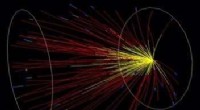
* Avalanche Effect: The free electrons are accelerated towards the anode by the electric field. They collide with other gas atoms, causing more ionization, leading to an avalanche of electrons.
* Electric Pulse: This avalanche creates a brief but measurable pulse of electric current.
* Detection and Counting: The pulse is amplified and detected by a circuit, registering the presence of the radiation. The number of pulses counted per unit of time indicates the radiation intensity.
Other important notes:
* Gas Type: Different gases are used depending on the type of radiation being measured.
* Dead Time: After a detection event, the tube has a short "dead time" where it cannot detect another particle.
* Energy Dependence: Geiger-Müller tubes are not very sensitive to the energy of the radiation.
Let me know if you would like to explore other radiation detection methods!