1. Technology:
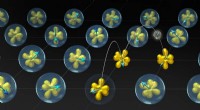
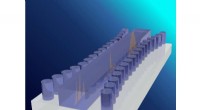
* Electronics: The very transistors that power our phones, computers, and appliances are based on quantum mechanics, a pillar of modern physics.
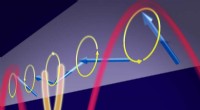
* Communication: From radio waves to lasers used in fiber optic cables, our communication systems rely heavily on electromagnetic theory and the wave-particle duality of light.
* Medical imaging: X-rays, MRI, PET scans – all these medical tools utilize principles of nuclear physics and particle interactions.
* Energy: Nuclear power plants harness the power of nuclear fission, a discovery of modern physics, to generate electricity. Solar panels, which rely on the photoelectric effect, are another example.
2. Materials Science:
* Stronger materials: Understanding atomic structure and bonding allows us to create stronger and lighter materials like carbon fiber used in aircraft and sporting equipment.
* New materials: Modern physics has led to the development of materials with unique properties like superconductors (used in magnetic levitation trains) and semiconductors (essential for electronics).
3. Everyday Life:
* Lighting: LED lights are more energy-efficient thanks to quantum physics understanding of semiconductor materials.
* GPS: GPS satellites rely on Einstein's theory of relativity to accurately pinpoint your location.
* Safety: Smoke detectors utilize the ionization of atoms (radioactivity) to detect smoke.
4. Understanding the World:
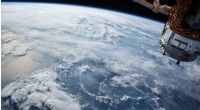
* Space exploration: Our understanding of gravity, space-time, and the formation of the universe, all thanks to modern physics, allows us to explore the cosmos.
* Climate change: The physics of radiation and greenhouse gases helps us understand and model climate change.
* Particle physics research: Studies of the smallest particles may lead to new discoveries with unforeseen applications in the future.
It's important to note that modern physics is not just about gadgets and technology. It also offers profound insights into the nature of reality, time, space, and the universe itself. These insights can inspire awe, curiosity, and a deeper appreciation for the world around us.