1. Gravity: The force of attraction between any two objects with mass. This is what keeps us on the ground and the Earth orbiting the Sun.
2. Electromagnetism: The force that arises from the interaction of electrically charged objects. This includes forces between magnets, and the force that powers electric motors.
3. Magnetic Force: A specific type of electromagnetic force that acts between magnetic poles. Magnets attract or repel each other without touching.
4. Friction: A force that opposes motion between two surfaces in contact. While it seems like a contact force, the microscopic interactions between surfaces are actually caused by electromagnetic forces.
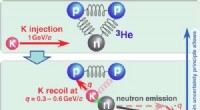
5. Nuclear Force: The strong force and weak force are fundamental forces that operate within the nucleus of atoms, holding protons and neutrons together.
6. Buoyancy: An upward force exerted by a fluid that opposes the weight of an immersed object. It's the reason things float.
7. Air Resistance: A force that opposes the motion of an object through the air. It's what slows down falling objects and allows birds to fly.
8. Electrostatic Force: The force of attraction or repulsion between electrically charged objects. This is why static electricity can make your hair stand on end.
9. Van der Waals Force: A weak attractive force that occurs between molecules. This force is responsible for the condensation of gases into liquids.
10. Casimir Effect: A quantum phenomenon where a vacuum can create an attractive force between two closely spaced objects. This force is incredibly weak but still measurable.
These examples highlight the variety and importance of non-contact forces in our universe. They are essential for understanding everything from the movement of planets to the behavior of atoms.