However, we can indirectly measure the effects of gravitational force using various tools and techniques:
1. Measuring Mass and Distance:
* Scales: Scales are used to measure the mass of an object. The weight of an object (the force of gravity acting on it) is directly proportional to its mass.
* Measuring Tape/Rulers: These instruments are used to measure the distance between objects, which is another crucial factor in determining gravitational force.
2. Observing Gravitational Effects:
* Pendulums: Pendulums are used to study the acceleration due to gravity (g). The period of a pendulum's swing depends on the length of the pendulum and the local value of g.
* Accelerometers: These devices measure acceleration, which can be used to calculate the gravitational force acting on an object.
* Gravimeters: Gravimeters are specialized instruments designed to measure the local strength of gravity with high precision. They are used in geophysics, geology, and other fields.
3. Measuring Gravitational Waves:
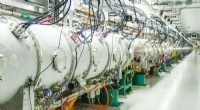
* Laser Interferometer Gravitational-Wave Observatory (LIGO): LIGO is a complex network of observatories designed to detect ripples in spacetime called gravitational waves, which are generated by massive cosmic events like black hole collisions.
In summary, there isn't a single instrument that directly measures gravitational force. Instead, we rely on various techniques to measure the effects of gravity on objects or observe the behavior of gravitational waves.