Here's why:
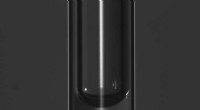
* Volume changes with temperature: Liquids expand when heated and contract when cooled. This means that the volume of a liquid measured in a cylinder will be slightly different at different temperatures.
* Calibration for accuracy: Measuring cylinders are calibrated at a specific temperature (usually 20°C) to ensure accuracy.
* Compensation for expansion: The markings on the cylinder account for the expected expansion or contraction of the liquid at that temperature.
So, why 20°C?
* Common laboratory temperature: 20°C is a relatively common room temperature, making it a practical choice for calibration.
* Standard in many countries: Many countries use 20°C as the standard temperature for volume measurements.
Important note: If you are using a measuring cylinder at a temperature significantly different from 20°C, your measurements might be slightly inaccurate. For precise work, it's important to consider the temperature of the liquid and adjust your measurements accordingly.