Here's why:
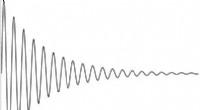
* Wavelength: The distance between two consecutive crests (or troughs) of a wave.
* Period: The time it takes for one complete cycle of the wave to occur (e.g., for one crest to pass a point and another crest to follow).
Relationship to Frequency:
The period (T) is inversely proportional to the frequency (f) of the wave:
* T = 1/f
This means:
* A higher frequency wave has a shorter period.
* A lower frequency wave has a longer period.
Example:
Imagine a wave with a frequency of 10 Hz (10 cycles per second). Its period would be:
* T = 1/f = 1/10 Hz = 0.1 seconds.
This means that it takes 0.1 seconds for one wavelength of this wave to pass a given point.