Contact Forces:
* Definition: Forces that occur when two objects physically touch each other.
* How they work: They result from the interaction of the surfaces of the objects.
* Examples:
* Normal force: The force that supports an object resting on a surface (like a book on a table).
* Friction: The force that opposes motion between surfaces in contact (like pushing a heavy box across the floor).
* Tension: The force transmitted through a rope, string, or cable when pulled taut (like a tug-of-war).
* Air resistance: The force that opposes the motion of an object through the air (like a parachute slowing down a skydiver).
* Applied force: A force directly applied to an object by a person or another object (like pushing a door open).
Non-Contact Forces:
* Definition: Forces that act on objects even when they are not touching.
* How they work: They result from fields or interactions that extend through space.
* Examples:
* Gravitational force: The force of attraction between any two objects with mass (like the Earth pulling you down).
* Electromagnetic force: The force that arises from charged particles and magnetic fields. This includes:
* Electric force: The force between charged objects (like static electricity).
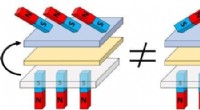
* Magnetic force: The force between magnets or between a magnet and a charged moving particle (like a compass needle pointing north).
* Weak nuclear force: A force involved in radioactive decay, responsible for the transformation of subatomic particles.
* Strong nuclear force: The force that holds protons and neutrons together in the nucleus of an atom.
Key Differences:
* Direct Contact: Contact forces require direct physical contact between objects, while non-contact forces do not.
* Fields or Interactions: Non-contact forces are mediated by fields or interactions that extend through space, while contact forces are localized to the point of contact.
* Examples: The examples listed above clearly illustrate the distinction between the two types of forces.
In summary: Contact forces are the result of physical touching, while non-contact forces act on objects even when they are not physically touching.