Understanding Acceleration
Acceleration is the rate of change of *velocity*. Velocity is a vector quantity, meaning it has both magnitude (speed) and direction. Therefore, acceleration can occur in two ways:
1. Change in Speed: If the speed of an object changes, it's accelerating.
2. Change in Direction: Even if the speed remains constant, a change in direction results in a change in velocity, and hence, acceleration.
Example: Circular Motion
Imagine a car driving around a circular track at a constant speed. Here's why it's accelerating:
* Constant Speed: The car maintains the same speed throughout its journey.
* Changing Direction: The car is constantly changing direction as it moves in a circle.
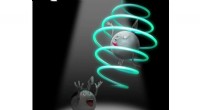
* Acceleration: Since the direction of motion changes, the velocity changes, and therefore the car is accelerating. This acceleration is directed towards the center of the circle and is called centripetal acceleration.
Key Takeaway
A body can have constant speed but still be accelerating if its direction of motion is changing.