Here's a breakdown:
Wave-like Properties:
* Diffraction: Light bends around obstacles, like waves passing through a narrow opening.
* Interference: Two light beams can interact to create areas of constructive and destructive interference, similar to how waves on water can combine.
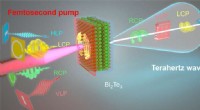
* Polarization: Light waves oscillate in a specific direction, which can be controlled with polarizing filters.
Particle-like Properties:
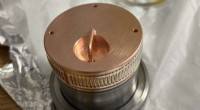
* Photoelectric Effect: Light can knock electrons off a metal surface, suggesting it's made of discrete packets of energy called photons.
* Compton Scattering: X-rays can scatter off electrons as if they were colliding with tiny particles.
The Explanation:
While it seems paradoxical, light exhibits both wave-like and particle-like behavior. The key is that light is fundamentally a quantum phenomenon. It behaves like a wave when its wave-like properties are being observed, and it behaves like a particle when its particle-like properties are being observed.
It's not that light is *both* a wave and a particle at the same time. It's that our classical concepts of waves and particles are inadequate to describe light's true nature.
In Summary:
Light is a fascinating phenomenon that defies easy categorization. It exhibits both wave-like and particle-like properties, making it a cornerstone of quantum mechanics.