Here are some examples:
* Neutrinos: These are subatomic particles that have very little mass and no charge. They interact weakly with other matter, making them very difficult to detect.
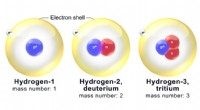
* Neutron: This is a subatomic particle found in the nucleus of an atom. It has about the same mass as a proton but carries no electric charge.
* Dark Matter: This is a hypothetical form of matter that is thought to make up a large portion of the universe. While its exact nature is still unknown, it is believed to be composed of particles that interact very weakly with ordinary matter, meaning they don't have a charge.
Importance:
While chargeless mass particles may seem like abstract concepts, they play a crucial role in the universe:
* Neutrinos: Help us understand nuclear reactions and the evolution of stars.
* Neutrons: Make up a significant part of the atomic nucleus and contribute to the stability of atoms.
* Dark Matter: Thought to be responsible for the observed gravitational effects in the universe that cannot be explained by visible matter alone.
The study of these particles is an ongoing area of research in physics, with the hope of further understanding the nature of the universe and its fundamental building blocks.