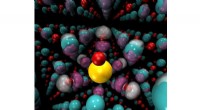
Here's why:
* Equal Axes: All three axes (a, b, and c) are of the same length.
* Right Angles: The axes intersect at 90-degree angles (α = β = γ = 90°).
This combination of equal axes and right angles leads to highly symmetrical crystals with cubic or box-like shapes. Some common examples of minerals that crystallize in the cubic system include:
* Halite (NaCl) - Table salt
* Diamond (C)
* Fluorite (CaF2)
* Pyrite (FeS2)