Here's how it works:
* Direction: The wind barb points in the direction the wind is blowing from.
* Speed: The length and shape of the barb indicate wind speed.
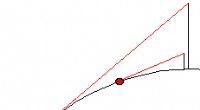
* A short barb (a flag with a single point) represents 5 knots of wind.
* A long barb (a flag with two points) represents 10 knots of wind.
* A pennant (a triangular flag) represents 50 knots of wind.
Example:
If you see a wind barb with one short barb pointing towards the west, that indicates a wind blowing from the west at 5 knots.
There are also other ways to represent wind speed and direction, such as:
* Wind sock: A cone-shaped fabric device that hangs from a pole. The direction the sock hangs indicates the wind direction, and its fullness indicates wind speed.
* Anemometer: An instrument that measures wind speed.
* Weather vane: An instrument that points in the direction of the wind.
But the wind barb is the standard way to represent wind speed and direction on weather maps and charts.