1. Refraction:
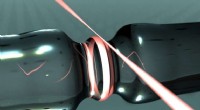
* The most noticeable change is refraction, which is the bending of light as it passes from one medium to another. This occurs because the speed of light changes as it enters a new medium.
* Example: When light passes from air to water, it slows down and bends towards the normal (an imaginary line perpendicular to the surface). This is why a straw in a glass of water appears to be bent at the surface.
2. Reflection:
* Some light is always reflected off the surface of the new medium.
* The amount of reflection depends on the difference in refractive index between the two media. The greater the difference, the more light is reflected.
* Example: This is why you can see your reflection in a mirror (a highly reflective surface).
3. Transmission:
* The remaining light that is not reflected is transmitted through the new medium.
* The direction of the transmitted light can be altered by refraction, as described above.
4. Absorption:
* Some light is absorbed by the medium. The color of the medium is determined by the wavelengths of light that are absorbed.
* Example: A red apple appears red because it absorbs all wavelengths of light except for red, which it reflects back to our eyes.
5. Scattering:
* Light can also be scattered as it passes through a medium. This occurs when light interacts with particles in the medium, causing it to change direction.
* Example: This is why the sky appears blue. Sunlight is scattered by molecules in the atmosphere, and blue light is scattered more than other colors.
In summary:
Light undergoes a complex interplay of refraction, reflection, transmission, absorption, and scattering when it passes from one medium to another. These phenomena are responsible for many of the optical effects we observe in our everyday world.