Here's why:
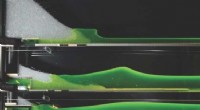
* Convection is a type of heat transfer that involves the movement of fluids (liquids or gases).
* When a fluid is heated, its molecules move faster and spread out, making it less dense. This less dense fluid rises.
* As the heated fluid rises, cooler, denser fluid sinks to take its place.
* This continuous cycle of rising and sinking fluid creates convection currents, which transfer heat throughout the fluid.
Examples of convection include:
* Boiling water: Heat from the stove heats the water at the bottom of the pot, causing it to rise. Cooler water sinks to replace it.
* Weather patterns: Warm air near the equator rises and flows toward the poles, while cooler air from the poles flows towards the equator.
* Heating a room: A radiator heats the air near it, causing the warm air to rise and circulate throughout the room.