True Zero Gravity:
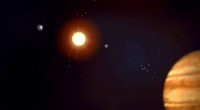
* Technically, zero gravity doesn't exist anywhere in the universe. Even in deep space, far from any massive objects, there will be some gravitational influence from distant stars and galaxies.
* Gravity is a force that always exists. It's what keeps us grounded and the planets in orbit around the sun.
Experiencing Weightlessness (Microgravity):
* Freefall: This is the most common way to experience weightlessness. When an object falls freely, it's not actually experiencing zero gravity; it's still being pulled by gravity. However, the object's motion is synchronized with the acceleration of gravity, so it feels like there's no force acting on it. This is what astronauts experience in orbit around Earth.
* Parabolic Flight: Special aircraft fly in a parabolic arc to simulate freefall for a short time. This is used for astronaut training and scientific research.
* Space Stations: Space stations are constantly falling around the Earth, creating a continuous freefall environment for astronauts.
Other Ways to Experience Reduced Gravity:
* High Altitude Balloons: By flying to extremely high altitudes, you can experience slightly reduced gravity due to being farther from the Earth's center.
* Buoyancy: Being submerged in water or a denser fluid can create a sensation of reduced gravity.
Important Note: While we can experience weightlessness, true zero gravity is a theoretical concept that cannot be achieved in practice.