* Gravity is a field force: Gravity is not a single point force but a field that exists everywhere in space. It's determined by the mass distribution of objects.
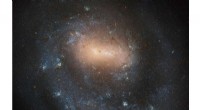
* Milky Way is massive and complex: The Milky Way is a huge galaxy with a complex distribution of matter: stars, gas, dust, and dark matter. Each of these components contributes to the gravitational field.
* Varying strength across the galaxy: The strength of gravity varies significantly depending on your location within the Milky Way. It's strongest near the galactic center (where there's a supermassive black hole) and weaker in the outer regions.
Instead of a single force value, we can talk about:
* The gravitational potential of the Milky Way: This is a measure of the gravitational energy an object would have at a given point in the galaxy.
* The escape velocity of the Milky Way: This is the speed an object needs to escape the gravitational pull of the galaxy and never return.
To get a specific value for the force of gravity at a particular point in the Milky Way, you'd need to:
1. Define the location: Specify the distance from the galactic center and the direction.
2. Model the mass distribution: Use a model of the galaxy's mass distribution (stars, gas, dark matter).
3. Apply Newton's Law of Gravitation: Calculate the force of gravity using the mass distribution and distance.
In summary: The Milky Way's gravity isn't a single value, but rather a complex field that varies across the galaxy. To determine the force of gravity at a specific location, you need to specify the location and model the galaxy's mass distribution.