Chemical Propulsion:
* Rocket Engines: These are the most common type of engine used for launching spacecraft into orbit and for interplanetary travel. They work by burning fuel and oxidizer to create hot gas that is expelled out of a nozzle, generating thrust.
* Solid-fuel rockets: These engines use a pre-mixed fuel and oxidizer that burns quickly and provides high thrust for short durations. They are often used for initial launch stages.
* Liquid-fuel rockets: These engines use separate tanks of fuel and oxidizer, which are pumped into the combustion chamber and burned to produce thrust. They provide more controllable thrust and longer burn times than solid-fuel rockets.
Electric Propulsion:
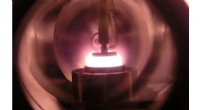
* Ion thrusters: These engines use electric fields to accelerate ions (charged particles) out of a nozzle. They produce low thrust but can operate for long durations, making them ideal for interplanetary missions.
* Hall-effect thrusters: These engines create a magnetic field that traps electrons, which then collide with propellant atoms, creating ions. This provides thrust for long periods, and they are used in some satellites for stationkeeping.
Other Propulsion Systems:
* Solar Sails: These spacecraft use large reflective sails to catch sunlight and propel themselves forward. The pressure from photons, while small, provides a constant acceleration, making them ideal for long-duration missions.
* Nuclear Propulsion: These engines use nuclear fission or fusion to generate heat and power. They are still in development but could provide the thrust needed for long-distance space travel.
* Gravity Assist: This technique uses the gravitational pull of planets to change the trajectory and speed of a spacecraft. It's a way to conserve fuel and is often used in interplanetary missions.
The choice of propulsion system depends on:
* Mission requirements: How much thrust is needed, how long the mission will last, and what type of trajectory is required.
* Payload: The weight and size of the spacecraft.
* Cost: Different propulsion systems have different development and operating costs.
Spacecraft propulsion technology is constantly evolving, with new and innovative systems being developed. These advancements will allow us to explore the cosmos more efficiently and explore even more distant destinations in the future.