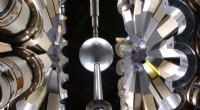
1. The Engine: Rocket engines are designed to direct their thrust in a specific direction.
2. The Gimbal: The engine is mounted on a structure called a gimbal, which is like a ball-and-socket joint. This allows the engine to rotate freely in multiple directions.
3. Changing Direction: By adjusting the angle of the gimbal, the rocket can change the direction of its thrust. This creates a force that pushes the rocket in the desired direction.
4. Controlled Maneuvers: The angle and duration of the gimbal movement are carefully controlled by the rocket's guidance system. This allows for precise maneuvers, like changing course, adjusting altitude, or even rotating the spacecraft.
Think of it like this: Imagine pushing a broom. If you push directly forward, it moves straight ahead. If you push at an angle, it moves in a curve. The gimbal acts like the angle of your push, allowing the rocket to steer its thrust.
Here are some additional points:
* Smaller thrusters: Some spacecraft use smaller thrusters to make minor adjustments, like fine-tuning their orientation.
* Gravity assists: For large course changes, spacecraft can use gravity assists from planets to "sling shot" themselves into a new trajectory.
* No air resistance: In the vacuum of space, there's no air resistance to slow down or change the rocket's direction, making it easier to maneuver.
In summary, rockets don't "turn" like cars on a road but instead use gimballing to adjust their thrust direction, allowing them to maneuver in space.