Here's a breakdown of the experiment and its significance:
The Problem:
* At the time, physicists believed that light traveled through a medium called luminiferous aether.
* This aether was thought to be stationary and permeate all of space.
* Earth's movement through the aether should create a "wind" that would affect the speed of light depending on its direction.
The Experiment:
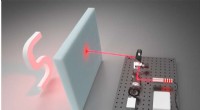
* The experiment used an interferometer, a device that splits a beam of light into two paths and then recombines them.
* Michelson and Morley expected that the speed of light would be slightly different in the two paths, due to the aether wind. This difference would cause an interference pattern when the beams recombined.
* The experiment was conducted with great precision, but no interference pattern was observed. This meant that the speed of light was the same in all directions, regardless of the Earth's motion.
The Significance:
* The Michelson-Morley experiment was a landmark experiment in physics.
* It disproved the existence of the luminiferous aether, which was a major pillar of classical physics at the time.
* This paved the way for Albert Einstein's special theory of relativity, which explained that the speed of light is constant for all observers and that time and space are not absolute but relative to the observer's motion.
In Summary:
The Michelson-Morley experiment was a crucial experiment that challenged the prevailing scientific understanding of the time. It led to the development of Einstein's groundbreaking theory of relativity, which has revolutionized our understanding of the universe.