Types of Motion:
* Circular Motion: The simplest case is when the body moves in a perfect circle around the point. This is characterized by:
* Constant radius: The distance from the body to the center of the circle remains the same.
* Uniform speed: The body covers equal distances in equal time intervals.
* Changing velocity: Even though the speed is constant, the velocity is constantly changing because its direction is constantly changing.
* Elliptical Motion: The body's path is an ellipse, with the point at one of the foci of the ellipse. This is common in planetary motion, where the Sun is at one focus.
* Spiral Motion: The body moves in a path that spirals inward or outward around the point. Examples include the path of a spinning ice skater or a charged particle moving in a magnetic field.
* Irregular Motion: The path can be complex and unpredictable, with no simple mathematical description. This is often seen in chaotic systems.
Forces Involved:
* Centripetal Force: This force always points towards the center of the path and is responsible for keeping the body moving in a curved path. The magnitude of the centripetal force depends on the body's mass, speed, and the radius of the path.
* Gravitational Force: For celestial bodies (like planets orbiting stars), the primary force responsible for the motion is gravity.
* Other Forces: Magnetic forces, electric forces, or friction can also contribute to the body's motion, depending on the situation.
Key Concepts:
* Angular Velocity: The rate at which the body's angular position changes, measured in radians per second.
* Angular Acceleration: The rate at which the body's angular velocity changes.
* Centripetal Acceleration: The acceleration directed towards the center of the path, caused by the change in direction of the body's velocity.
* Period: The time it takes for the body to complete one full revolution around the point.
* Frequency: The number of revolutions the body completes per unit time.
Examples:
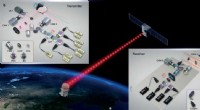
* A satellite orbiting Earth: The satellite's motion is primarily governed by Earth's gravitational pull, which acts as the centripetal force.
* A ball tied to a string and swung in a circle: The tension in the string provides the centripetal force.
* A car going around a curve: The friction between the tires and the road provides the centripetal force.
To provide a more specific answer, please tell me:
* What kind of body is it? (e.g., a planet, a car, a particle)
* What point in space is it moving around? (e.g., the Sun, a star, a specific location)
* What forces are acting on the body?
* What is the shape of the path? (e.g., circular, elliptical, spiral)
Once you provide this information, I can give you a more detailed explanation of the motion and its characteristics.