1. Centripetal Force and Gravity:
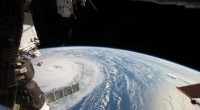
* For an object to orbit another (like a satellite around Earth), it needs a force pulling it towards the center of the orbit. This force is called centripetal force.
* In the case of orbits, gravity provides this centripetal force. The gravitational attraction between the orbiting object and the central body keeps it from flying off in a straight line.
2. Balancing Act:
* If the orbiting object is moving too slow, gravity will pull it down, causing it to spiral in and crash.
* If it's moving too fast, it will escape the gravitational pull completely and fly off into space.
* For a stable orbit, the velocity must be just right to perfectly balance the gravitational pull, creating a circular or elliptical path.
3. The Equation:
The relationship between orbital velocity (v), acceleration due to gravity (g), and the radius of the orbit (r) is defined by this equation:
v² = g * r
This equation tells us:
* The faster the object is moving (higher v), the stronger the gravitational force (g) needs to be to keep it in orbit at a given radius (r).
* The larger the orbit (higher r), the slower the object needs to move (lower v) to stay in orbit under the same gravitational force (g).
Example:
Let's say you have a satellite orbiting Earth. Earth's gravitational acceleration (g) at that altitude is 9.8 m/s². If the satellite orbits at a radius of 7,000 km (7,000,000 meters), then its orbital velocity would be:
v² = 9.8 m/s² * 7,000,000 m
v = √(9.8 m/s² * 7,000,000 m)
v ≈ 7,668 m/s
In Conclusion:
The relationship between orbiting velocity and acceleration due to gravity is one of balance. The velocity needs to be just right to counteract the gravitational pull and maintain a stable orbit. This relationship is essential for understanding how spacecraft, satellites, and even planets stay in their orbits.