Here's why:
* Newton's Law of Universal Gravitation: This law states that every particle in the universe attracts every other particle with a force that is proportional to the product of their masses and inversely proportional to the square of the distance between their centers. This law doesn't specify a medium for the force to act through, implying that it operates even in a vacuum.
* Einstein's Theory of General Relativity: This theory explains gravity as a curvature of spacetime caused by the presence of mass and energy. Since spacetime is a fundamental concept, it exists even in a vacuum, meaning that gravity can act in a vacuum.
Examples:
* Planets orbiting the Sun: Planets are held in their orbits by the Sun's gravity, which acts through the vacuum of space.
* The Moon orbiting the Earth: The Moon's orbit is maintained by the Earth's gravitational pull, even though there's a vacuum between them.
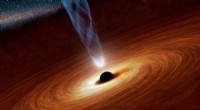
* Black holes: These objects are so dense that their gravity is incredibly strong, pulling everything, even light, into them. This happens in the vacuum of space.
In conclusion, gravity is not dependent on the presence of matter or any medium to propagate. It acts through the vacuum of space, making it a fundamental force that shapes the universe.