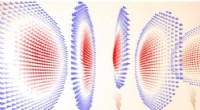
Here's how it works:
* Light spreads out in all directions: Imagine the sun as a point source emitting light equally in all directions. This light spreads out like a sphere expanding outwards.
* Area increases with distance: As the distance from the sun increases, the surface area of this expanding sphere also increases.
* Intensity decreases: Since the same amount of light energy is distributed over a larger area, the intensity of light (energy per unit area) decreases.
Mathematically:
The intensity (I) of light is inversely proportional to the square of the distance (r) from the source:
* I ∝ 1/r²
Example:
If you double your distance from the sun, the intensity of sunlight will decrease to one-fourth of its original value.
Important Note:
This assumes that the sun is a point source and that there are no other factors affecting the light's intensity, such as absorption by the atmosphere.