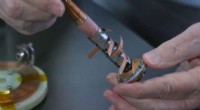
Here's a breakdown of its functions:
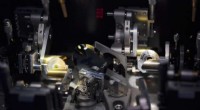
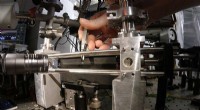
* Objective Lens Selection: The turret typically houses multiple objective lenses with varying magnifications (e.g., 4x, 10x, 40x, 100x). By rotating the turret, you can align any of these lenses with the light path, changing the magnification of the specimen.
* Precise Alignment: The turret is designed to ensure that each objective lens is accurately centered and aligned with the light path, minimizing distortions and ensuring clear imaging.
* Ease of Use: The rotating mechanism allows for quick and smooth switching between objectives, making it efficient to adjust the magnification for different viewing needs.
* Parfocal Adjustment: Many microscopes have parfocal objectives, meaning they are designed to stay in focus when you switch between them. The turret contributes to this feature by ensuring the lenses are properly aligned.
In essence, the revolving nosepiece is the heart of magnification control in a compound light microscope, offering a convenient and precise way to select and use different objective lenses for optimal viewing of your specimens.