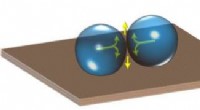
1. Vortex: A vortex is a swirling pattern of fluid. It's characterized by a closed streamline where the fluid rotates around a central axis.
2. Angular Velocity (ω): This describes how fast an object rotates. It's measured in radians per second (rad/s). For a vortex, the angular velocity at a given distance from the center is related to the tangential velocity of the fluid at that point.
3. Obliquity: This term usually refers to an angle, often the angle between two planes or directions. In the context of fluid dynamics, it's not immediately clear what "obliquity" refers to in relation to a vortex.
Possible Interpretations:
* Vortex with an Inclined Axis: If you're imagining a vortex whose central axis is tilted (not vertical), then the angular velocity could be analyzed in relation to the tilted axis. However, this would require specifying the angle of inclination (i.e., the obliquity).
* Vortex in a Shear Flow: Perhaps you're considering a vortex embedded in a fluid flow that has a shear component (i.e., the flow velocity varies across the fluid). The "obliquity" might refer to the angle between the vortex's rotation axis and the direction of the shear flow.
To answer your question accurately, we need more context. Please clarify what you mean by "obliquity" in this context.
Here's what you can provide to make your question clearer:
* What is the specific type of vortex? (e.g., free vortex, forced vortex, Rankine vortex)
* What is the nature of the fluid flow? (e.g., stationary, moving, shear flow)
* What is meant by "obliquity" in this case? (e.g., angle of inclination, angle between vortex axis and flow direction)
Once you provide more information, I can help you understand the angular velocity of the vortex in that specific scenario.