Rockets don't need anything to "push on" in the traditional sense. They work based on the principle of Newton's Third Law of Motion: For every action, there is an equal and opposite reaction.
Here's how it plays out:
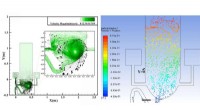
1. Burning Fuel: A rocket engine burns fuel, creating hot, expanding gases.
2. Expulsion of Gases: These gases are expelled out of the rocket nozzle at high speed.
3. Reaction Force: This expulsion of gas creates a reaction force pushing the rocket in the opposite direction. Imagine pushing off from a wall – the wall pushes back on you.
4. Momentum Conservation: The total momentum of the system (rocket + expelled gas) remains constant. As the gas gains momentum in one direction, the rocket gains momentum in the opposite direction.
Key Point: Rockets don't need air or any external medium to push against. They create their own "push" by expelling matter (the hot gas) in the opposite direction they want to move.
Think of it like this: If you're on a skateboard and throw a heavy ball forward, you'll be pushed backward. The rocket engine is essentially throwing out a lot of hot gas, which creates a large force pushing it forward.
So, even in the vacuum of space, rockets can move because they generate their own "push" by expelling matter.