* Gravity is not a force: Einstein's theory revolutionized our understanding of gravity. Instead of being a force that pulls objects together, it is described as a curvature of spacetime. Imagine a bowling ball placed on a stretched sheet. The ball creates a dip in the sheet, which represents the curvature of spacetime.
* Spacetime is a fabric: Einstein combined space and time into a single entity called spacetime. Think of it as a four-dimensional fabric that can bend and stretch.
* Mass and energy warp spacetime: Massive objects like stars and planets warp this fabric, creating the effect we perceive as gravity. The more massive an object, the greater the curvature.
* Objects follow the curvature: Objects moving in this warped spacetime follow the shortest path, known as a geodesic. This path appears as a curved trajectory to us, which is why we perceive gravity as a force.
Here are some of the key implications of this theory:
* Gravity affects the passage of time: Time slows down near massive objects due to the curvature of spacetime.
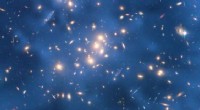
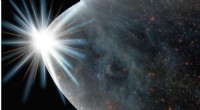
* Light bends around massive objects: Because spacetime is curved, even light, which is massless, follows the curvature, causing it to bend around massive objects. This phenomenon is known as gravitational lensing.
* Black holes are regions of extreme curvature: Black holes are objects with such a high density that their gravitational pull is so strong that even light cannot escape.
* The universe is expanding: The theory predicts that the universe is expanding, which is supported by observational evidence.
In summary, the general theory of relativity shows us that gravity is not a force but a manifestation of the curvature of spacetime caused by mass and energy. This curvature affects the motion of objects and even the flow of time.