1. Constant Motion:
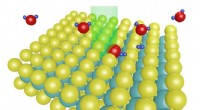
* Gas particles are in continuous motion, constantly colliding with each other and the walls of their container.
* This movement is random, meaning there's no predictable pattern to the direction or speed of individual particles.
* The average kinetic energy of the particles determines the temperature of the gas.
2. High Kinetic Energy:
* Gas particles have weak intermolecular forces, meaning they are not strongly attracted to each other.
* This allows them to move freely and rapidly with high kinetic energy.
* The higher the temperature, the faster the particles move and the greater their kinetic energy.
3. Diffusion and Expansion:
* The constant motion and weak forces between particles allow gases to diffuse (spread out) into available space and expand to fill their container.
4. Compressibility:
* Gases are highly compressible because the particles are far apart and have a lot of space between them.
* Applying pressure can force the particles closer together.
5. Low Density:
* Due to the large spaces between particles, gases have low density compared to liquids and solids.
In summary:
The movement of particles in gases is a continuous, random, high-energy process that leads to the characteristic properties of gases like diffusion, expansion, compressibility, and low density.