Here's a breakdown:
Key Characteristics:
* Purposeful Design: Scientific instruments are designed to address specific scientific questions, tasks, or measurements.
* Accuracy and Precision: They strive to provide reliable, accurate, and precise data.
* Calibration and Standardization: Many instruments need to be calibrated against known standards to ensure their accuracy.
* Objective Data: They aim to provide objective measurements or observations, minimizing bias.
* Interdisciplinary Use: Scientific instruments are often used across multiple scientific fields.
Examples of Scientific Instruments:
* Microscopes: Allow us to see objects too small for the naked eye.
* Telescopes: Enable us to observe distant celestial objects.
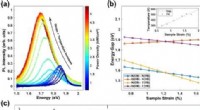
* Spectrometers: Analyze the composition and properties of light.
* Thermometers: Measure temperature.
* Balances: Measure mass.
* pH Meters: Measure the acidity or alkalinity of a solution.
* Synchrotrons: Produce high-energy light beams for research in fields like materials science and biology.
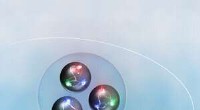
* Particle Accelerators: Used to study the fundamental building blocks of matter.
Beyond Tools:
Scientific instruments are not just tools, they are also important components of the scientific method. They help us to:
* Formulate hypotheses: By observing data, we can develop testable explanations.
* Collect data: Instruments provide accurate and reliable measurements for analysis.
* Analyze data: The information gathered by instruments helps us draw conclusions and make interpretations.
* Communicate findings: Results obtained through instruments are shared with the scientific community.
In conclusion, scientific instruments are indispensable for advancing scientific knowledge and understanding the world around us. They are tools of exploration, discovery, and progress.