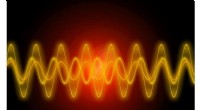
* Wavelength (λ): The distance between two successive crests (or troughs) of a wave. It is often measured in meters (m).
* Frequency (f): The number of wave cycles that pass a fixed point in one second. It is measured in Hertz (Hz), where 1 Hz is equal to one cycle per second.
* Velocity (v): The speed at which a wave travels through a medium. It is measured in meters per second (m/s).
The Relationship:
The three are directly related by the following equation:
v = fλ
* Velocity (v) is directly proportional to both frequency (f) and wavelength (λ). This means:
* If the frequency increases, the velocity also increases (assuming the wavelength stays the same).
* If the wavelength increases, the velocity also increases (assuming the frequency stays the same).
Example:
Imagine you're watching ocean waves. If the waves are coming in more frequently (higher frequency), they will also be traveling faster (higher velocity). Similarly, if the waves have a longer distance between crests (longer wavelength), they will also be traveling faster.
Important Notes:
* Medium: The speed of a wave is affected by the medium it travels through. For example, sound travels faster in solids than in air.
* Electromagnetic Waves: For electromagnetic waves (like light), the velocity in a vacuum is constant, which is the speed of light (approximately 3 x 10⁸ m/s). In this case, the frequency and wavelength are inversely proportional. This means that a higher frequency wave will have a shorter wavelength, and vice versa.
Let me know if you have any more questions!