1. Solid:
* Particles are tightly packed and vibrate in fixed positions.
* Definite shape and volume.
* Incompressible, meaning they resist changes in volume.
* Examples: Ice, rock, metal
2. Liquid:
* Particles are close together but can move around.
* Definite volume but takes the shape of its container.
* Slightly compressible.
* Examples: Water, oil, mercury
3. Gas:
* Particles are far apart and move freely and randomly.
* No definite shape or volume, filling the entire container.
* Highly compressible.
* Examples: Air, oxygen, carbon dioxide
Other Physical States:
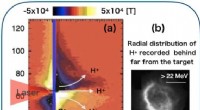
* Plasma: A highly ionized gas where electrons are stripped from atoms, making it electrically conductive. Found in stars and lightning.
* Bose-Einstein Condensate (BEC): A state of matter where atoms are cooled to near absolute zero and behave like a single entity.
Key Points:
* Physical states can be changed by altering temperature and pressure.
* The physical state of a substance affects its properties, such as density, viscosity, and thermal conductivity.
* Understanding physical states is essential in many scientific disciplines, including chemistry, physics, and materials science.