1. Refraction:
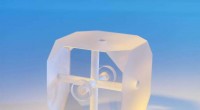
* The most common occurrence: The light ray will bend as it enters the glass block. This bending is called refraction.
* Why it happens: Light travels slower in glass than in air. This change in speed causes the ray to bend at the interface.
* Direction of bending: The ray bends towards the normal (an imaginary line perpendicular to the surface of the glass) because the speed of light decreases.
2. Reflection:
* Some light will always reflect: A small portion of the light will bounce back from the surface of the glass. This is called reflection.
* Angle of incidence equals angle of reflection: The angle at which the light hits the surface (angle of incidence) is equal to the angle at which it bounces back (angle of reflection).
3. Total Internal Reflection:
* When the angle of incidence is high enough: If the light ray enters the glass at a sufficiently large angle (greater than the critical angle), all of the light will be reflected back into the glass. This is called total internal reflection.
* Used in optical fibers: Total internal reflection is used in optical fibers to transmit light over long distances.
Other things to consider:
* Color of the glass: The color of the glass can affect the amount of light that is absorbed and transmitted.
* Thickness of the glass: The thicker the glass, the more the light will be refracted and absorbed.
In summary, when a ray of light is shone at a glass block, it will experience refraction, reflection, and possibly total internal reflection. The specific effects depend on the angle of incidence and the properties of the glass.