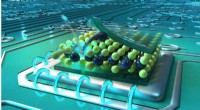
* Atoms: The basic building blocks of matter are atoms, which consist of a positively charged nucleus (made of protons and neutrons) surrounded by negatively charged electrons. In a neutral atom, the number of protons and electrons are equal, resulting in a net charge of zero.
* Ionization: When an atom gains or loses electrons, it becomes an ion.
* Cations: Atoms that lose electrons become positively charged ions (cations). They have more protons than electrons.
* Anions: Atoms that gain electrons become negatively charged ions (anions). They have more electrons than protons.
Methods of Changing Electrical Charge:
1. Friction: Rubbing two materials together can transfer electrons from one surface to another. This is how static electricity works. For example, rubbing a balloon on your hair can transfer electrons from your hair to the balloon, making the balloon negatively charged and your hair positively charged.
2. Conduction: Direct contact between a charged object and a neutral object can transfer charge. Electrons can flow from the charged object to the neutral object, changing the charge of the neutral object.
3. Induction: Bringing a charged object near a neutral object can cause a redistribution of charge within the neutral object, without any direct contact. This is because the charged object repels or attracts electrons in the neutral object, causing an imbalance in charge distribution.
4. Chemical Reactions: Some chemical reactions involve the transfer of electrons, which can result in the formation of ions. This is how electrolytes in batteries generate an electrical current.
Key Concepts:
* Conservation of Charge: The total charge in a closed system remains constant. When an object becomes charged, it doesn't create or destroy charge; it merely redistributes existing charge.
* Coulomb's Law: The force between two charged objects is directly proportional to the product of their charges and inversely proportional to the square of the distance between them.
Understanding how matter becomes electrically charged is essential for comprehending various physical phenomena, including static electricity, electromagnetism, and the operation of electronic devices.