1. Energy:
* Atoms and Molecules: Electrons in atoms can only occupy specific energy levels, leading to distinct spectral lines.
* Light: Light exists as packets of energy called photons, with energy determined by their frequency.
* Particles: In quantum mechanics, particles have quantized energy levels, especially when confined to a small space.
2. Angular Momentum:
* Atoms: Electrons orbiting the nucleus have quantized angular momentum, meaning they can only spin at specific rates.
* Photons: Photons have quantized angular momentum, which determines their polarization (direction of oscillation).
3. Spin:
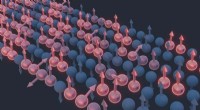
* Elementary Particles: Particles like electrons, protons, and neutrons possess an intrinsic angular momentum called spin. This spin is quantized and can only take on specific values, usually multiples of ħ/2, where ħ is the reduced Planck constant.
4. Magnetic Moment:
* Atoms: Atomic magnetic moments, arising from the spin and orbital motion of electrons, are quantized and lead to phenomena like paramagnetism and ferromagnetism.
5. Color Charge (in the context of Quantum Chromodynamics):
* Quarks: Quarks, the fundamental particles that make up protons and neutrons, carry a type of charge called "color charge." This color charge comes in three types (red, green, and blue) and is quantized.
6. Other Quantized Quantities:
* Spacetime: While space and time are often thought of as continuous, there is speculation about their quantization at very small scales in theories like loop quantum gravity.
* Gravity: The quantization of gravity is a major challenge in theoretical physics, but some theories, like string theory, suggest that it might also be quantized.
Important Note: Quantization is a consequence of the wave-particle duality of matter and the fundamental nature of quantum mechanics. At macroscopic scales, these quantized values can appear continuous due to the smallness of the quantum steps.