1. Strong Nuclear Force: This force binds protons and neutrons together in the nucleus of an atom. It's the strongest force in nature, but it operates over extremely short distances. Without it, atoms wouldn't exist, and neither would the matter that makes up our universe.
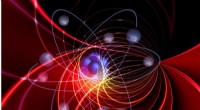
2. Electromagnetic Force: This force governs the interactions between electrically charged particles. It's responsible for holding electrons in orbit around the nucleus, for chemical bonding, and for the creation of light. It plays a fundamental role in everything from chemistry to electricity and magnetism.
3. Weak Nuclear Force: This force is responsible for radioactive decay, where certain atomic nuclei transform into different elements. It's weaker than the strong force, but operates over a slightly longer distance. It plays a crucial role in the energy production of stars.
While gravity is a very familiar force, it's considered relatively weak compared to the other three. However, it's crucial for large-scale structures like galaxies and planets, and governs the motion of objects across vast distances.
It's important to remember that these four forces are the basis of all physical phenomena. Depending on the specific area of physics you're interested in, the importance of each force will vary.