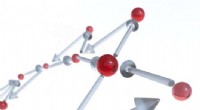
* Strong Intermolecular Forces: Solids have the strongest intermolecular forces (like ionic bonds, covalent bonds, or metallic bonds) holding their particles together. These forces restrict the movement of particles, giving them a fixed shape and volume.
* Closely Packed Particles: Particles in solids are arranged in a highly organized, closely packed structure. This packing adds to the rigidity by resisting deformation.
* Limited Motion: Particles in a solid can only vibrate about their fixed positions. This limited motion contributes to their overall stability and resistance to change in shape.
In contrast, liquids and gases have weaker intermolecular forces and their particles have more freedom to move. This makes them less rigid and allows them to flow and change shape.