It's not about speed, it's about uncertainty.
While electrons do move incredibly fast within an atom, their "speed" is not the primary reason we can't know their exact location. It's a fundamental principle called Heisenberg's Uncertainty Principle.
Heisenberg's Uncertainty Principle states that it's impossible to know both the position and momentum (which includes speed) of a particle with perfect accuracy. The more precisely we measure one, the less precisely we can measure the other.
So, how does this relate to electrons?
* Electrons are tiny: They're incredibly small, and their behavior is governed by quantum mechanics.
* Wave-particle duality: Electrons exhibit both wave-like and particle-like properties. This means we can't think of them as just tiny balls whizzing around.
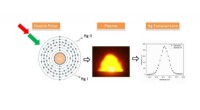
* Probability clouds: We describe the location of an electron in an atom using a probability cloud. This cloud represents the likelihood of finding the electron at a given point in space.
In short, we can't know an electron's exact location because:
1. Quantum mechanics: The rules of quantum mechanics govern their behavior, not the classical physics of everyday objects.
2. Uncertainty: Heisenberg's principle limits our ability to know both position and momentum precisely.
3. Probability: We can only describe the likelihood of finding an electron in a certain region, not its exact position.
It's important to note:
* The uncertainty principle doesn't mean we know nothing. It just means there's a limit to how precisely we can know both position and momentum.
* The electron's speed does play a role in how its probability cloud is shaped, but it's not the sole determining factor.
Let me know if you'd like to dive deeper into any of these concepts!