1. Standardized Units:
* Universal Language: SI provides a consistent language for scientists worldwide, ensuring clarity and avoiding confusion arising from different unit systems.
* Reproducible Experiments: Using standardized units allows scientists to replicate experiments accurately and compare results globally.
* Accurate Measurements: Precise definitions of SI units ensure measurements are consistent and reliable.
2. Coherent System:
* Derived Units: SI units are interconnected, with derived units like velocity (m/s) or force (kg*m/s²) being defined based on fundamental units (meter, kilogram, second). This simplifies calculations and reduces errors.
* Easy Conversion: Converting between units within the metric system is simple due to the base-10 system (e.g., 1 kilometer = 1000 meters).
3. Specific Units for Physics:
* Length: The meter (m) is used for measuring distances, wavelengths, and other spatial dimensions.
* Mass: The kilogram (kg) is used for measuring the amount of matter in an object.
* Time: The second (s) is the fundamental unit for measuring durations and intervals.
* Temperature: The Kelvin (K) is the standard unit for thermodynamic measurements.
Examples of Metric System Use in Physics:
* Newton's Laws of Motion: Using SI units for mass, acceleration, and force ensures calculations are consistent and universally understood.
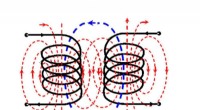
* Electromagnetism: Coulomb's law, Faraday's law, and other key electromagnetic equations rely on SI units for charge, current, and magnetic fields.
* Thermodynamics: Concepts like heat, work, and entropy are measured using SI units for temperature, energy, and power.
* Quantum Mechanics: SI units are crucial for expressing fundamental constants like Planck's constant, the speed of light, and the electron charge.
Beyond the Basics:
* SI prefixes: The metric system uses prefixes like kilo (k), mega (M), and nano (n) to denote multiples and submultiples of units, making it convenient for expressing very large or small quantities.
* Scientific notation: SI units are often used in conjunction with scientific notation to represent extremely large or small numbers concisely.
In conclusion, the metric system's standardized units, coherent structure, and specific units for physical quantities make it the preferred choice for scientific measurements, calculations, and communication. It facilitates reproducibility, accuracy, and clear communication across disciplines and borders.