* Light travels much faster: The speed of light is approximately 299,792,458 meters per second, while the speed of sound in air is around 343 meters per second. This vast difference makes it simpler to measure the time it takes for light to travel a known distance, even with relatively crude methods.
* Light can travel in a vacuum: Sound needs a medium like air, water, or solids to propagate. This makes measuring the speed of sound more complicated, as you need to account for the properties of the medium. Light, on the other hand, can travel through the vacuum of space, making its speed a constant and easily measurable value.
* Technological advancements: We have developed incredibly precise tools for measuring the speed of light, like lasers and interferometers. These tools allow us to measure the speed of light with remarkable accuracy. While measuring the speed of sound can be done with simple methods, achieving high precision requires more sophisticated equipment.
Early Methods for Measuring Speed of Light
* Galileo's attempt: Although unsuccessful, Galileo's experiment attempted to measure the speed of light by observing the delay between uncovering a lantern and seeing the light from a distant lantern.
* Ole Rømer's observations: Rømer observed the timing of eclipses of Jupiter's moons and noticed a consistent delay when Earth was farther from Jupiter. He correctly attributed this delay to the time it took light to travel the greater distance, providing the first rough estimate of the speed of light.
Modern Methods
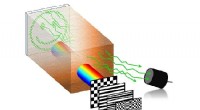
* Interferometry: Using devices like the Michelson interferometer, scientists can measure the speed of light with astonishing accuracy.
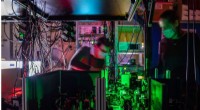
* Laser-based measurements: Modern lasers and time-of-flight techniques allow for highly precise measurements of the speed of light.
In conclusion, while both speeds are important, the speed of light is easier to measure because of its high speed, its ability to travel in a vacuum, and the availability of highly precise measuring instruments.