Understanding the Concepts
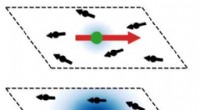
* Static Friction: This is the force that prevents an object from moving when at rest. It's equal and opposite to the applied force until the object starts to move.
* Kinetic Friction: This is the force that opposes the motion of an object that is already moving. It's typically less than static friction.
* Coefficient of Friction: This is a dimensionless number that represents the ratio of the force of friction to the normal force pressing the surfaces together.
Calculations
1. Calculate the Normal Force:
* The normal force (Fn) is equal to the weight of the block.
* Weight (W) = mass (m) * acceleration due to gravity (g)
* W = 0.2 kg * 9.8 m/s² = 1.96 N
* Therefore, Fn = 1.96 N
2. Calculate the Maximum Static Friction:
* Maximum static friction (Fs) = coefficient of static friction (μs) * normal force (Fn)
* Fs = 0.4 * 1.96 N = 0.784 N
3. Determine the Force Needed to Start Motion:
* To get the block moving, you need to apply a force slightly greater than the maximum static friction.
Therefore, a force slightly greater than 0.784 N is needed to get the 200 g block moving.
Important Note: Once the block starts moving, the friction acting on it changes to kinetic friction. The kinetic friction force (Fk) is calculated as:
* Fk = coefficient of kinetic friction (μk) * normal force (Fn)
* Fk = 0.35 * 1.96 N = 0.686 N
To keep the block moving at a constant speed, you would only need to apply a force equal to the kinetic friction force (0.686 N).