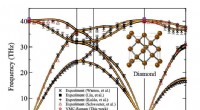
However, the speed of light can be affected when it travels through a medium other than a vacuum. This is because the light interacts with the particles in the medium, causing it to slow down.
Here's a breakdown of the factors that can affect the speed of light:
* Medium: The speed of light is slower in denser mediums, like water or glass, compared to a vacuum. This is because the light interacts with the atoms and molecules in the medium, causing it to change direction and slow down.
* Density of the medium: The denser the medium, the slower the speed of light.
* Refractive index: The refractive index of a medium is a measure of how much light bends when it enters the medium. A higher refractive index means a slower speed of light.
* Frequency/Wavelength: While the speed of light in a vacuum is constant, the frequency and wavelength of light can change when it enters a medium. This is because the light's interaction with the medium affects its energy, which is related to its frequency.
Important Note: It's crucial to distinguish between the speed of light in a vacuum, which is a fundamental constant, and the speed of light in a medium, which is variable depending on the factors listed above.