Here's how it worked:
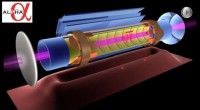
* Electric Field: When cathode rays passed through an electric field, they deflected towards the positive plate, indicating they carried a negative charge.
* Magnetic Field: The deflection of the rays in a magnetic field was perpendicular to both the direction of the magnetic field and the direction of the rays. This allowed him to measure the force acting on the particles.
* Combining the Data: By carefully measuring the deflections in both fields, Thomson could calculate the charge-to-mass ratio (e/m) of the particles.
This was a groundbreaking discovery because it showed that cathode rays were not just light, but were composed of particles with a specific charge-to-mass ratio. This was a crucial step in the understanding of the electron and the structure of atoms.