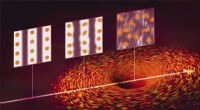
Microscopy encompasses a broad range of techniques that use microscopes to visualize objects that are too small to be seen with the naked eye.
Here are some common types of microscopy:
* Light Microscopy: Uses visible light to illuminate and magnify specimens.
* Electron Microscopy: Uses a beam of electrons to create highly magnified images, providing much higher resolution than light microscopy.
* Scanning Probe Microscopy: Uses a sharp tip to scan the surface of a material, creating 3D images of the surface.
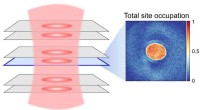
* Confocal Microscopy: Uses a laser to illuminate a specific plane of the specimen, producing sharper images with less background noise.
* Fluorescence Microscopy: Uses fluorescent dyes to label specific structures in a specimen, allowing for visualization of their distribution and interactions.
The specific type of microscopy used depends on the size and nature of the object being studied, as well as the information that needs to be obtained.