Here's a breakdown:
* Surface tension is a force that exists at the interface between a liquid and another medium, like air. This force arises from the cohesive forces between liquid molecules.
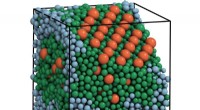
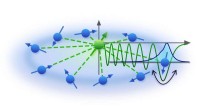
* Cohesive forces are the attractive forces between molecules of the same substance. At the surface, liquid molecules are only surrounded by other liquid molecules on one side, resulting in a net inward force towards the bulk of the liquid.
* This inward force creates a tight, elastic-like surface that resists disruption or penetration.
Examples of surface tension in action:
* Water droplets forming on a surface: The surface tension of water causes droplets to form a spherical shape, minimizing surface area.
* Insects walking on water: Some insects can walk on water because their weight is distributed over a large enough area to be supported by the surface tension.
* Soap bubbles: Soap reduces the surface tension of water, allowing bubbles to form.
Surface tension is a crucial property for many natural and industrial processes. It plays a role in everything from capillary action in plants to the formation of raindrops.