1. Electron Fluctuations:
* Electrons in atoms and molecules are constantly in motion.
* At any given instant, the electrons might be unevenly distributed, creating a temporary, instantaneous dipole moment.
* This means one side of the molecule has a slightly negative charge, while the other side has a slightly positive charge.
2. Induced Dipoles:
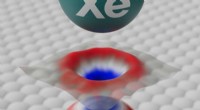
* This temporary dipole in one molecule can induce a temporary dipole in a neighboring molecule.
* The negative end of the first molecule repels the electrons in the neighboring molecule, causing them to shift slightly and creating a dipole in the second molecule.
* These induced dipoles are temporary and constantly changing, but they create a weak attraction between the molecules.
3. Attraction:
* The positive end of one molecule is attracted to the negative end of the neighboring molecule.
* This weak attraction is called a dispersion force.
Factors Affecting Dispersion Forces:
* Size and Polarizability: Larger molecules with more electrons are more easily polarized, meaning they have a stronger tendency to develop temporary dipoles. This leads to stronger dispersion forces.
* Shape: Long, linear molecules have stronger dispersion forces than compact, spherical molecules because their electrons can more easily move along the length of the molecule.
Overall, dispersion forces are the weakest type of intermolecular force, but they are present in all molecules. They are responsible for the condensation of gases into liquids and the solidification of liquids into solids.