1. Understand the Basics:
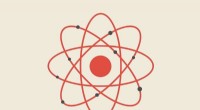
* Atomic Number: The number of protons in an atom's nucleus (defines the element). You can find this on the periodic table.
* Mass Number: The total number of protons and neutrons in an atom's nucleus. You'll typically find this as a whole number near the element's symbol on the periodic table.
* Neutrons: The number of neutrons is calculated by subtracting the atomic number from the mass number.
2. Steps to Calculate the Number of Neutrons:
1. Identify the element: You'll need to know the element you're working with.
2. Look up the atomic number: Find the element on the periodic table and note its atomic number.
3. Find the mass number: Look for the mass number on the periodic table (usually a whole number near the element's symbol).
4. Calculate the number of neutrons: Subtract the atomic number from the mass number.
Example:
Let's find the number of neutrons in a carbon atom:
* Carbon's Atomic Number: 6
* Carbon's Mass Number: 12
* Number of Neutrons: 12 (mass number) - 6 (atomic number) = 6
Important Note: The periodic table often lists atomic masses (average mass of all isotopes of an element), which are decimal numbers. You'll need to use the *whole number* mass number to calculate the number of neutrons in a specific atom.