* Periodic Motion: Any motion that repeats itself after a fixed interval of time is called periodic motion. This interval is called the period. Examples include the hands of a clock, the swinging of a pendulum, and the vibrations of a tuning fork.
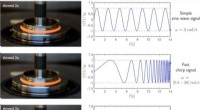
* Oscillatory Motion: Oscillatory motion is a specific type of periodic motion where the object moves back and forth about a fixed point or equilibrium position. This movement is often characterized by a restoring force that acts to bring the object back to its equilibrium position.
Key differences:
* Direction of movement: Oscillatory motion involves to-and-fro movement, whereas periodic motion can have various patterns. Think of a spinning wheel – it undergoes periodic motion, but not oscillatory.
* Restoring force: Oscillatory motion is often driven by a restoring force that pulls the object back to its equilibrium position (like a spring). This force is not necessarily present in general periodic motion.
Examples:
* Periodic, but not oscillatory: The Earth rotating around the sun is periodic, but not oscillatory, as it doesn't move back and forth.
* Oscillatory and periodic: A simple pendulum is both oscillatory and periodic, moving back and forth around its equilibrium point.
In summary: All oscillatory motions are periodic, but not all periodic motions are oscillatory. Oscillatory motion is a specialized type of periodic motion where the object moves back and forth around a fixed point with a restoring force.