Here's the breakdown:
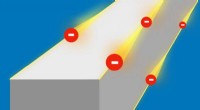
* Electrons are "loose" in some materials: Some materials, like metals, have electrons that are loosely bound to their atoms. These electrons can easily move around, making the material a good conductor.
* Electrons are "tight" in others: Other materials, like plastics and glass, have electrons that are more tightly bound to their atoms. These electrons are harder to move, making the material an insulator.
When you rub two different materials together:
1. Electrons can transfer: If one material has more loosely held electrons, it's more likely to lose some of them when rubbed against another material. This loss of electrons creates a positive charge on the first material.
2. The other material gains electrons: The material that gained electrons from the first one becomes negatively charged.
Triboelectric series:
A triboelectric series is a list of materials arranged in order of their tendency to gain or lose electrons when rubbed together.
* Materials at the top of the list tend to lose electrons and become positively charged.
* Materials at the bottom tend to gain electrons and become negatively charged.
Example:
* If you rub a piece of rabbit fur (high on the series) against a PVC pipe (low on the series), the fur will lose electrons and become positively charged, while the PVC pipe will gain electrons and become negatively charged.
Conclusion:
The ability of a material to hold onto electrons determines how it will be charged by rubbing. This is why certain combinations of materials produce a stronger static charge than others.